• Home
  • About
  • Membership
  • News
  • Past Events
  • Contact
Menu

MIT@SAUDI ARABIA

Street Address
City, State, Zip
Phone Number

Your Custom Text Here

MIT@SAUDI ARABIA

  • Home
  • About
  • Membership
  • News
  • Past Events
  • Contact

MIT J-Clinic Researchers Identify New Antibiotic Compound

February 24, 2020 Guest User
halicin-antibiotics-300x300.jpg

Using a machine-learning algorithm, MIT researchers have identified a powerful new antibiotic compound. In laboratory tests, the drug killed many of the world’s most problematic disease-causing bacteria, including some strains that are resistant to all known antibiotics. It also cleared infections in two different mouse models.

The computer model, which can screen more than a hundred million chemical compounds in a matter of days, is designed to pick out potential antibiotics that kill bacteria using different mechanisms than those of existing drugs.

“We wanted to develop a platform that would allow us to harness the power of artificial intelligence to usher in a new age of antibiotic drug discovery,” says James Collins, the Termeer Professor of Medical Engineering and Science in MIT’s Institute for Medical Engineering and Science (IMES) and Department of Biological Engineering. “Our approach revealed this amazing molecule which is arguably one of the more powerful antibiotics that has been discovered.”

In their new study, the researchers also identified several other promising antibiotic candidates, which they plan to test further. They believe the model could also be used to design new drugs, based on what it has learned about chemical structures that enable drugs to kill bacteria.

“The machine learning model can explore, in silico, large chemical spaces that can be prohibitively expensive for traditional experimental approaches,” says Regina Barzilay, the Delta Electronics Professor of Electrical Engineering and Computer Science in MIT’s Computer Science and Artificial Intelligence Laboratory (CSAIL).

Barzilay and Collins, who are faculty co-leads for MIT’s Abdul Latif Jameel Clinic for Machine Learning in Health, are the senior authors of the study, which appears today in Cell. The first author of the paper is Jonathan Stokes, a postdoc at MIT and the Broad Institute of MIT and Harvard.

A new pipeline

Over the past few decades, very few new antibiotics have been developed, and most of those newly approved antibiotics are slightly different variants of existing drugs. Current methods for screening new antibiotics are often prohibitively costly, require a significant time investment, and are usually limited to a narrow spectrum of chemical diversity.

“We’re facing a growing crisis around antibiotic resistance, and this situation is being generated by both an increasing number of pathogens becoming resistant to existing antibiotics, and an anemic pipeline in the biotech and pharmaceutical industries for new antibiotics,” Collins says.

To try to find completely novel compounds, he teamed up with Barzilay, Professor Tommi Jaakkola, and their students Kevin Yang, Kyle Swanson, and Wengong Jin, who have previously developed machine-learning computer models that can be trained to analyze the molecular structures of compounds and correlate them with particular traits, such as the ability to kill bacteria.

The idea of using predictive computer models for “in silico” screening is not new, but until now, these models were not sufficiently accurate to transform drug discovery. Previously, molecules were represented as vectors reflecting the presence or absence of certain chemical groups. However, the new neural networks can learn these representations automatically, mapping molecules into continuous vectors which are subsequently used to predict their properties.

In this case, the researchers designed their model to look for chemical features that make molecules effective at killing E. coli. To do so, they trained the model on about 2,500 molecules, including about 1,700 FDA-approved drugs and a set of 800 natural products with diverse structures and a wide range of bioactivities.

Once the model was trained, the researchers tested it on the Broad Institute’s Drug Repurposing Hub, a library of about 6,000 compounds. The model picked out one molecule that was predicted to have strong antibacterial activity and had a chemical structure different from any existing antibiotics. Using a different machine-learning model, the researchers also showed that this molecule would likely have low toxicity to human cells.

This molecule, which the researchers decided to call halicin, after the fictional artificial intelligence system from “2001: A Space Odyssey,” has been previously investigated as possible diabetes drug. The researchers tested it against dozens of bacterial strains isolated from patients and grown in lab dishes, and found that it was able to kill many that are resistant to treatment, including Clostridium difficile, Acinetobacter baumannii, and Mycobacterium tuberculosis. The drug worked against every species that they tested, with the exception of Pseudomonas aeruginosa, a difficult-to-treat lung pathogen.

To test halicin’s effectiveness in living animals, the researchers used it to treat mice infected with A. baumannii, a bacterium that has infected many U.S. soldiers stationed in Iraq and Afghanistan. The strain of A. baumannii that they used is resistant to all known antibiotics, but application of a halicin-containing ointment completely cleared the infections within 24 hours.

Preliminary studies suggest that halicin kills bacteria by disrupting their ability to maintain an electrochemical gradient across their cell membranes. This gradient is necessary, among other functions, to produce ATP (molecules that cells use to store energy), so if the gradient breaks down, the cells die. This type of killing mechanism could be difficult for bacteria to develop resistance to, the researchers say.

“When you’re dealing with a molecule that likely associates with membrane components, a cell can’t necessarily acquire a single mutation or a couple of mutations to change the chemistry of the outer membrane. Mutations like that tend to be far more complex to acquire evolutionarily,” Stokes says.

In this study, the researchers found that E. coli did not develop any resistance to halicin during a 30-day treatment period. In contrast, the bacteria started to develop resistance to the antibiotic ciprofloxacin within one to three days, and after 30 days, the bacteria were about 200 times more resistant to ciprofloxacin than they were at the beginning of the experiment.

The researchers plan to pursue further studies of halicin, working with a pharmaceutical company or nonprofit organization, in hopes of developing it for use in humans.

Optimized molecules

After identifying halicin, the researchers also used their model to screen more than 100 million molecules selected from the ZINC15 database, an online collection of about 1.5 billion chemical compounds. This screen, which took only three days, identified 23 candidates that were structurally dissimilar from existing antibiotics and predicted to be nontoxic to human cells.

In laboratory tests against five species of bacteria, the researchers found that eight of the molecules showed antibacterial activity, and two were particularly powerful. The researchers now plan to test these molecules further, and also to screen more of the ZINC15 database.

The researchers also plan to use their model to design new antibiotics and to optimize existing molecules. For example, they could train the model to add features that would make a particular antibiotic target only certain bacteria, preventing it from killing beneficial bacteria in a patient’s digestive tract.

“This groundbreaking work signifies a paradigm shift in antibiotic discovery and indeed in drug discovery more generally,” says Roy Kishony, a professor of biology and computer science at Technion (the Israel Institute of Technology), who was not involved in the study. “Beyond in silica screens, this approach will allow using deep learning at all stages of antibiotic development, from discovery to improved efficacy and toxicity through drug modifications and medicinal chemistry.”

The research was funded in part by the Abdul Latif Jameel Clinic for Machine Learning in Health (J-Clinic), a collaborative effort between MIT and Community Jameel established in 2018.

“The world is in desperate need of new antibiotics to combat dangerous diseases, so it is hugely encouraging that the team at J-Clinic at MIT appears to have helped make a breakthrough in finding a genuinely new one using machine learning,” said Fady Jameel, president, International, of Community Jameel. “For decades, Community Jameel has been committed to supporting research that can help improve people’s lives. Combatting the risk from antibiotic-resistant infections, like tuberculosis, could have a profound impact on us all.”

Research funding was also contributed by the Defense Threat Reduction Agency, the Broad Institute, the DARPA Make-It Program, the Canadian Institutes of Health Research, the Canadian Foundation for Innovation, the Canada Research Chairs Program, the Banting Fellowships Program, the Human Frontier Science Program, the Pershing Square Foundation, the Swiss National Science Foundation, a National Institutes of Health Early Investigator Award, the National Science Foundation Graduate Research Fellowship Program, and a gift from Anita and Josh Bekenstein.
Source: https://betterworld.mit.edu/artificial-int...

Jameel-Toyota Scholarship At MIT Celebrates Its 25th Anniversary

December 30, 2019 Guest User
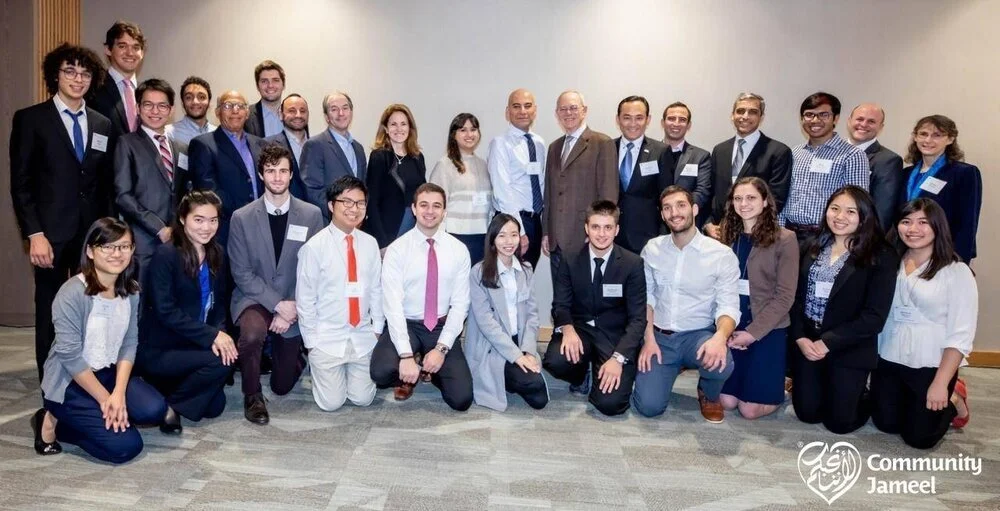
Jameel-Toyota Scholarship grantees in group photo with MIT President (L. Rafael Reif) and Community Jameel International President (Fady Jameel)

Community Jameel, a global philanthropy, celebrated the 25th anniversary of the Abdul Latif Jameel-Toyota Endowed Scholarship programme at an event at the Massachusetts Institute of Technology (MIT) attended by current and alumni Jameel-Toyota Scholars; Fady Jameel, the Community Jameel President, International; MIT President L. Rafael Reif; and Shinichi Yasui, the Toyota Motor North America Executive Vice President, Research and Development.

To enable young people from all over the world to achieve their potential through education, the Jameel-Toyota Scholarship was established in 1994 at MIT, by Mohammed Jameel KBE, founder of Community Jameel and an alumnus of MIT. The Scholarship is named in honour of the late Abdul Latif Jameel, whose philanthropic tradition is continued today by Community Jameel, and the Toyota Motor Corporation, in recognition of the longstanding friendship and collaboration between those two organisations.

Over the past 25 years, more than 180 students from 28 countries have completed undergraduate studies at MIT through the Jameel-Toyota Scholarship. Students from countries in Asia, North Africa and Europe are eligible for the Scholarship. Many alumni Scholars have gone on to establish successful careers in business, academia and industry, in the US and back home. At the anniversary event, Community Jameel unveiled a new network for Jameel-Toyota Scholars past and present, that offers mentorship to students and builds ties to Community Jameel’s broad range of philanthropic efforts, including four labs at MIT.

Speaking at the event, L. Rafael Reif, President of MIT, said: “Through the leadership and vision of the Jameel family, the Jameel-Toyota Scholars come to MIT to fulfill their potential. While they are here, they enrich the MIT community with their ideas, energy and talent—and as they move on to successful careers and graduate studies, they use what they learned here to empower communities and improve people’s lives around the globe.”

Fady Jameel, President, International of Community Jameel said: “Community Jameel has launched the Jameel-Toyota Scholars Network, which focuses on engaging Scholars and all students, from the MIT community and beyond, through several key initiatives, including providing them access to a network of alumni mentors and organising periodical events for networking and knowledge exchange.”

“I am very excited that Toyota continues to assist talented students in pursuing their dreams,” says Shinichi Yasui, Executive Vice President, Research and Development, Toyota Motor North America. “Toyota is a real champion of diversity and inclusion, and advocates for underserved communities. We’re so proud to recognise the academic excellence and perseverance of these scholars, together with Community Jameel”. The Jameel-Toyota Scholarship is administered by MIT and is open to candidates from eligible countries via MIT Student Financial Services.

Source: https://www.communityjameel.org/en/news/Ja...

MIT alumnus appointed head of King Abdul Aziz City for Science and Technology

November 15, 2019 Guest User
1837641-437823275.png

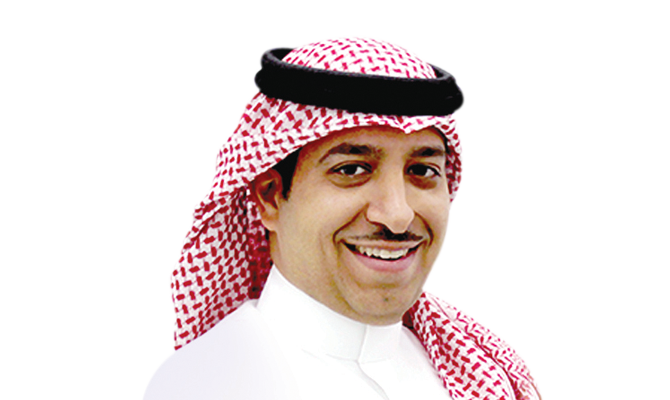
Dr. Anas bin Faris Al-Faris has been appointed the chief of King Abdul Aziz City for Science and Technology (KACST) by royal decree.

Al-Faris is also an associate professor at KACST and a visiting associate professor at the Massachusetts Institute of Technology (MIT) in the US. Prior to his latest promotion, he was the vice president of the research institute at KACST. He has served in this position since 2018.

Al-Faris is a member of the Global Research Council, a board member at the Saudi Arabia Advanced Research Alliance, and the National Digital Transformation Executive Committee. He has broad research experience in diverse fields including big data analytics, strategic engineering and systems architecture. At KACST, he founded the Joint Centers of Excellence Program, which includes 14 joint centers with leading universities in the US and UK such as MIT, Stanford, Caltech, Berkeley, Oxford and Cambridge.

He is also the founder of the Center for Complex Engineering Systems at KACST and MIT as well as the Decision Support Center of KACST and Boeing. Al-Faris created the Technical Leaders Program to train and qualify the new generation to become leaders.

He holds a Ph.D. in design computation and a master’s degree in computation for design and optimization from the Massachusetts Institute of Technology (MIT). He also has two other master’s degrees from the University of Pennsylvania — a master of science computational design systems and a master of architecture in building technology.

Source: https://www.arabnews.com/node/1581691/saud...

MIT economists Esther Duflo and Abhijit Banerjee win Nobel Prize

October 31, 2019 Guest User

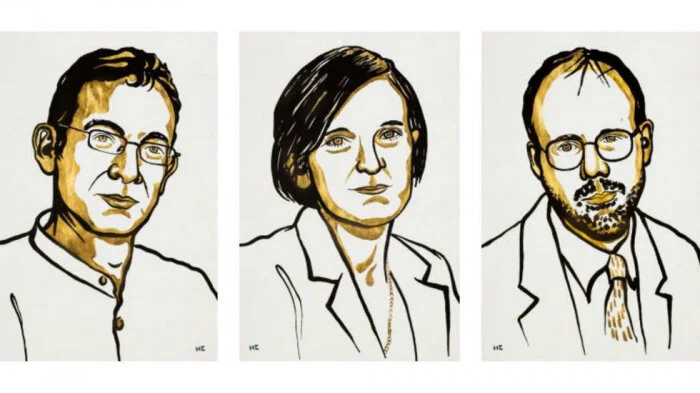
Esther Duflo and Abhijit Banerjee, MIT economists whose work has helped transform antipoverty research and relief efforts, have been named co-winners of the 2019 Sveriges Riksbank Prize in Economic Sciences in Memory of Alfred Nobel, along with another co-winner, Harvard University economist Michael Kremer.

“We are incredibly happy and humbled,” Duflo told MIT News after learning of the award. “We feel very fortunate to see this kind of work being recognized.” Banerjee told MIT News it was “wonderful” to receive the award, adding “you don’t get this lucky many times in your life.”

The work of Duflo and Banerjee, which has long been intertwined with Kremer’s, has been highly innovative in the area of development economics, emphasizing the use of field experiments in research in order to realize the benefits of laboratory-style randomized, controlled trials. Duflo and Banerjee have applied this new precision while studying a wide range of topics implicated in global poverty, including health care, education, agriculture, and gender issues, while developing new antipoverty programs based on their research.

Duflo and Banerjee also co-founded MIT’s Abdul Latif Jameel Poverty Action Lab (J-PAL) in 2003, along with a third co-founder, Sendhil Mullainathan, now of the University of Chicago. J-PAL, a global network of antipoverty researchers that conducts field experiments, has now become a major center of research, facilitating work across the world.

J-PAL also examines which kinds of local interventions have the greatest impact on social problems, and works to implement those programs more broadly, in cooperation with governments and NGOs. Among J-PAL’s notable interventions are deworming programs that have been adopted widely. In the statement released this morning, the Royal Swedish Academy of Sciences, which grants the Nobel awards, noted that the work of Duflo, Banerjee, and Kremer has “dramatically improved our ability to fight poverty in practice” and cited their “new approach to obtaining reliable answers about the best ways to fight global poverty.”

Source: http://news.mit.edu/2019/esther-duflo-abhi...

MIT Sloan alumnus appointed Saudi Ambassador to Austria

September 1, 2019 Guest User
1732351-491940486.png

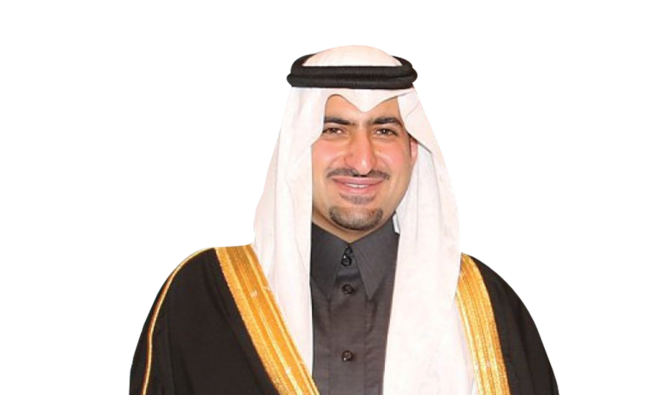
Prince Abdullah bin Khalid bin Sultan is Saudi Arabia’s ambassador to Austria and non-resident ambassador to Slovakia and Slovenia.

His appointment took place in April 2019, but he took over his duties as an ambassador on Wednesday, when he presented his credentials. The prince was also sworn in as a permanent delegate to the United Nations and the international organizations in Vienna.

Prince Abdullah presented his credentials to the Chief of Protocol at the Austrian Foreign Ministry Ambassador Enno Drofenik and met the Secretary-General of the Austrian Foreign Ministry Ambassador Johannes Peterlik. During the meetings, the parties discussed ways to strengthen and develop relations between the two countries in various fields.

The prince was born in 1988. He obtained his bachelor’s degree in economics from Columbia University in New York City, US, in 2010. He received his master’s degree in business management in 2015 from the MIT Sloan School of Management in Massachusetts.

Between 2010 to 2011, he interned at the Union Bank of Switzerland (UBS) in the UK In that same year, he also worked as a researcher in the Stock Exchange. In 2018, a royal decree proclaimed him a member in the board of directors for the Saudi Equestrian Club.

He is also a member of the executive committee of National Air Services (Nass) Holding Company. He has served as an adviser at the royal court since June 2017.

Source: https://www.arabnews.com/node/1546696/saud...

MIT CLUB OF SAUDI ARABIA

Updated: February 2020